
The ArcyArt Directory has become a useful resource for anyone interested in the art world. Whether you’re an artist looking to increase your online visibility, a collector searching for original artwork, or a student researching different art styles, an organized directory can save time and make discovering creative talent much easier.
Unlike a general search engine, an art directory brings together artists, galleries, exhibitions, and educational resources in one place. Instead of browsing dozens of unrelated websites, visitors can explore categorized listings based on artistic style, medium, or location.
In this guide, you’ll learn how the ArcyArt Directory works, who benefits from it, what features make a quality art directory, and how online art directories continue to shape the future of the global art community.
What Is the ArcyArt Directory?
Understanding an Online Art Directory
An online art directory is a digital platform that organizes information about artists and art-related resources into searchable categories.
Rather than functioning as a marketplace, it acts as an organized database where users can discover artists, explore artwork, and learn more about different creative disciplines.
Many directories include listings for:
- Painters
- Sculptors
- Illustrators
- Digital artists
- Photographers
- Mixed media artists
- Galleries
- Museums
- Art organizations
- Art exhibitions
Because everything is organized logically, visitors can quickly locate information without endless searching.
Why Online Art Directories Matter
The internet has opened countless opportunities for artists, but it has also created fierce competition for visibility.
Many talented artists struggle to reach the right audience despite creating exceptional work.
Online directories solve this challenge by providing a structured platform where creative professionals can showcase their work while making it easier for art lovers to discover new talent.
Major advantages include:
- Better artist discovery
- Organized creative resources
- Easier research
- Professional presentation
- Long-term online visibility
- Improved networking opportunities
Instead of depending entirely on social media algorithms, artists gain another avenue for being discovered.
How the ArcyArt Directory Works
Most online art directories follow a straightforward structure designed for both artists and visitors.
Artist Profiles
Artists typically create profiles containing:
Profile Element |
Purpose |
|
Biography |
Introduces the artist |
|
Portfolio |
Displays artwork |
|
Artistic Style |
Defines creative approach |
|
Medium |
Shows materials used |
|
Contact Information |
Enables communication |
|
Exhibitions |
Highlights experience |
|
Awards |
Builds credibility |
Search and Filters
Visitors can search using filters such as:
- Artist name
- Country
- Medium
- Art style
- Subject
- Category
These search options help users quickly find artwork matching their interests.
Benefits for Artists
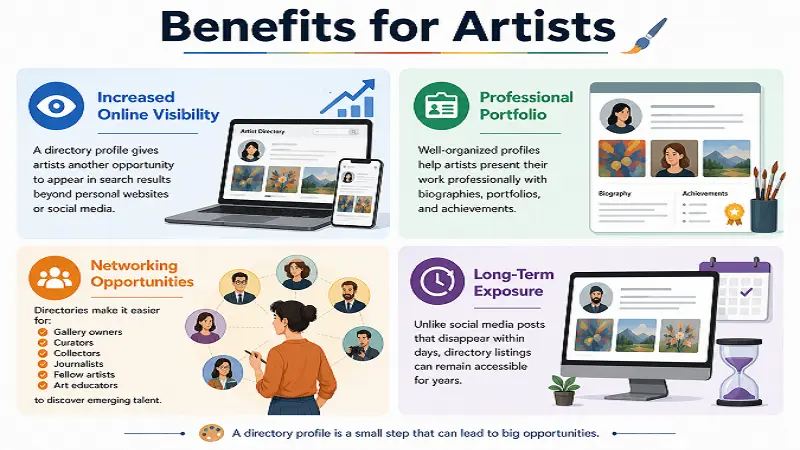
Increased Online Visibility
A directory profile gives artists another opportunity to appear in search results beyond personal websites or social media.
Professional Portfolio
Well-organized profiles help artists present their work professionally with biographies, portfolios, and achievements.
Networking Opportunities
Directories make it easier for:
- Gallery owners
- Curators
- Collectors
- Journalists
- Fellow artists
- Art educators
to discover emerging talent.
Long-Term Exposure
Unlike social media posts that disappear within days, directory listings can remain accessible for years.
Benefits for Collectors and Art Buyers
Collectors often spend significant time searching for original artwork.
An organized directory simplifies the process by allowing users to compare artists, styles, and mediums in one location.
Collectors can:
- Discover emerging artists
- Explore different techniques
- Learn artist backgrounds
- Compare artistic styles
- Save time researching artwork
This creates a more enjoyable browsing experience.
Why Students and Researchers Use Art Directories
Art directories are valuable educational resources.
Students can:
- Study contemporary artists
- Compare artistic movements
- Understand different mediums
- Research exhibitions
- Explore creative careers
Teachers can also use artist profiles as classroom resources to introduce students to diverse artistic perspectives.
Types of Artists You’ll Find
One of the biggest strengths of an online directory is diversity.
Traditional Painters
Artists creating work with oil, acrylic, watercolor, or gouache.
Digital Artists
Professionals producing concept art, digital paintings, illustrations, and graphic designs.
Sculptors
Creators working with clay, stone, wood, bronze, and recycled materials.
Photographers
Artists specializing in portrait, landscape, wildlife, documentary, and fine-art photography.
Illustrators
Creative professionals producing artwork for books, publishing, advertising, games, and magazines.
Mixed Media Artists
Artists combining multiple materials to create unique visual experiences.
Features of a High-Quality Art Directory
Not every directory offers the same experience.
A quality platform usually includes:
Easy Navigation
Simple menus and organized categories improve usability.
Advanced Search
Helpful filters make finding artists faster.
High-Resolution Images
Clear artwork images allow visitors to appreciate details.
Detailed Profiles
Comprehensive biographies and portfolios build trust.
Regular Updates
Accurate listings keep information useful for visitors.
Educational Resources
Articles, interviews, tutorials, and exhibition news provide additional value beyond artist listings.
Practical Tips for Artists Creating a Strong Profile
A well-prepared profile attracts more attention than an incomplete listing.
Follow these best practices:
- Upload professional-quality artwork images.
- Write a concise and engaging biography.
- Organize artwork into logical collections.
- Keep exhibition history updated.
- Add awards and achievements.
- Include accurate contact information.
- Mention your preferred artistic medium.
- Refresh your portfolio regularly.
Small improvements can create a much stronger first impression.
Common Challenges of Online Art Directories
Despite their advantages, directories also face challenges.
Keeping Information Updated
Artists regularly add new exhibitions and artwork, making maintenance essential.
Managing Large Databases
Thousands of profiles require consistent organization.
Maintaining Quality
Directories must balance open submissions with quality control.
Technology Changes
Modern users expect fast searches, mobile-friendly layouts, and responsive design.
Directories must continue evolving to meet these expectations.
Future Trends in Online Art Directories
Technology is transforming how people discover and experience art.
Future improvements may include:
- AI-powered artwork recommendations
- Virtual reality gallery tours
- Interactive artist portfolios
- Image recognition search
- Personalized browsing experiences
- Enhanced mobile accessibility
These innovations will make discovering artists even easier while expanding opportunities for creators worldwide.
How to Get the Most from an Art Directory
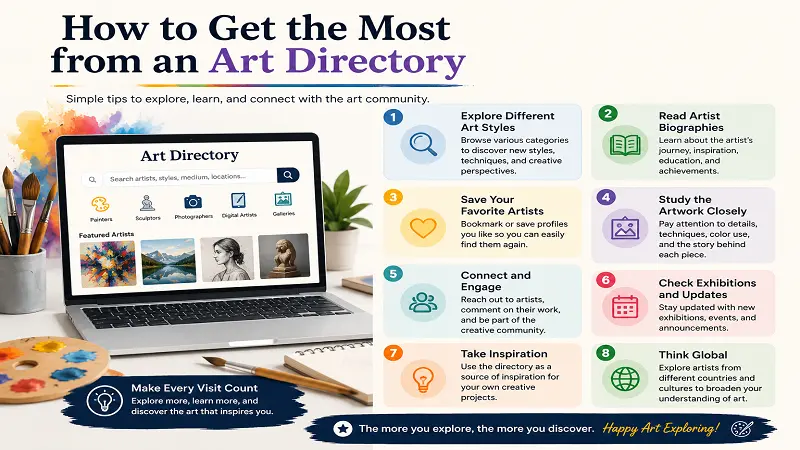
Whether you’re new to art or an experienced collector, these tips can improve your experience:
- Explore multiple artistic styles.
- Read artist biographies carefully.
- Compare portfolios before forming opinions.
- Learn about different mediums.
- Follow emerging artists.
- Visit exhibition listings when available.
- Keep notes on artists whose work inspires you.
Taking time to explore beyond familiar names often leads to exciting discoveries.
Conclusion
The ArcyArt Directory serves as a valuable gateway to the global art community by organizing artists, galleries, exhibitions, and educational resources into one accessible platform. It helps artists gain greater visibility while making it easier for collectors, students, educators, and art enthusiasts to discover creative talent from around the world.
As digital technology continues to reshape the art industry, organized directories will remain an essential resource for exploring artwork, researching artists, and building meaningful connections within the creative community. Whether you’re beginning your artistic journey or expanding an existing collection, the ArcyArt Directory provides a practical starting point for discovering the diverse world of visual art. See more
Frequently Asked Questions
1. What is the ArcyArt Directory?
The ArcyArt Directory is an online art directory that organizes information about artists, galleries, exhibitions, and art-related resources, making them easier to discover.
2. Who can benefit from using an art directory?
Artists, collectors, students, educators, researchers, gallery owners, and anyone interested in visual arts can benefit from using an organized art directory.
3. How do artists improve their profiles in an art directory?
Artists should use high-quality images, write a professional biography, keep their portfolio updated, and include exhibition history and contact details.
4. Why are online art directories better than general web searches?
Art directories organize information into categories and offer specialized search filters, making it easier to find relevant artists and artwork quickly.
5. What is the future of online art directories?
Future developments are expected to include AI-powered recommendations, virtual gallery experiences, interactive portfolios, faster search tools, and more personalized browsing experiences.